- Home
- Focus Areas
- Schutz und Resilienz von KRITIS
- Home
- Focus Areas
- Schutz und Resilienz von KRITIS

Protection and Resilience of Critical Infrastructures
The invisible foundation of modern societies
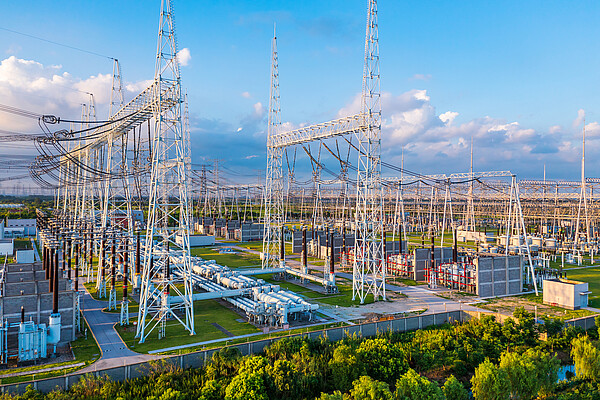
Critical infrastructures (German: KRITIS) form the functional backbone of everyday life. They tend to enter public awareness only when they cease to function — for example, during disruptions to district heating networks, mobile communications outages, or constraints on medical services. Energy, transport, communications, water, healthcare and food supply are closely interconnected. It is precisely these interdependencies that make the system both highly capable and inherently vulnerable.
The failure of individual components can trigger cascading effects that impact multiple sectors simultaneously. Security therefore arises not solely from protecting individual assets, but from the capacity of systems to absorb disruption and remain operational. Three questions are decisive: How likely is a disruption? How severe would its consequences be? And how quickly can the system stabilise and continue functioning?
From protection to resilience
Higher walls and more technology alone are no longer sufficient. Cyberattacks, supply shortages, workforce constraints and system overloads demonstrate that traditional protection concepts are reaching their limits. The focus today is on resilience: the ability to withstand disruption, recover from it and learn from crises.
At the same time, the number of hybrid threats is increasing, with digital, physical and organisational attacks acting in concert. Attacks on IT systems can affect physical processes, and the misuse of civilian technologies is opening new vectors of attack. Drones offer a clear example: when deployed without authorisation, they can breach security perimeters or disrupt operations. At the same time, as reconnaissance and inspection tools they support situational awareness — particularly in crisis scenarios. They thus represent both a risk and a protective instrument.
Space as a factor in critical infrastructure
Many critical processes today depend on space-based services. Navigation, communication and Earth observation satellites are essential for transport, energy supply, logistics and finance. Disruptions, spoofing or outages can trigger cascading effects with tangible local consequences. At the same time, Earth observation and satellite-based situational intelligence support the monitoring of infrastructure and crisis management. Space therefore constitutes both a critical infrastructure in its own right and a means of protecting terrestrial systems.
Regulation and a permanent task
Regulatory requirements are also increasing. With the implementation of NIS2, new obligations relating to cyber and information security have come into force in Germany. In addition, comprehensive legislation on the protection and resilience of critical infrastructure — often referred to in Germany as a “KRITIS framework law” — is currently under discussion. It focuses on risk assessments, protective measures and reporting structures.
Resilience thus remains an ongoing task. It emerges where technical robustness, organisational preparedness and strategic decision-making interact — and where dependencies and vulnerabilities are assessed openly and realistically.




How can we help you?
Please fill in the form and we will get in touch with you as soon as possible.
This section contains third-party content that you can view with a single click.
By loading the form, personal data may be transmitted to the third-party provider. You can find more information in our privacy policy